
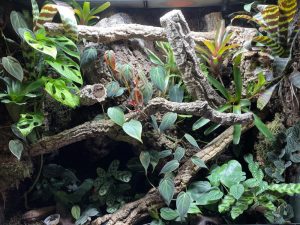
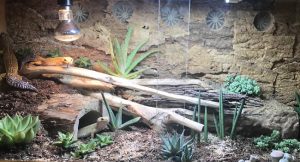
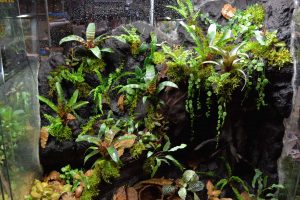
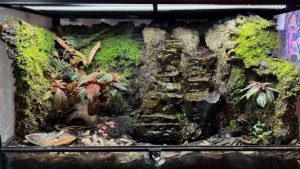
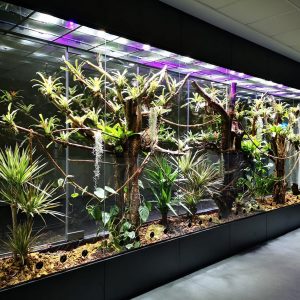
Imagine bringing a thriving rainforest, lush jungle floor, or rugged forest ecosystem into your home—complete with living plants, beneficial microorganisms, natural décor, and the reptile of your dreams. That’s exactly what a bioactive terrarium offers.
Over the past decade, bioactive terrariums have become one of the fastest-growing trends in the reptile hobby. More than just beautiful displays, these living ecosystems provide healthier, more enriching environments that closely mimic nature. While they may seem intimidating at first, creating a bioactive habitat is easier than many people realize—and the rewards are well worth the effort.
A bioactive terrarium is a living ecosystem where plants, beneficial bacteria, fungi, and tiny cleanup organisms work together to recycle waste and maintain a healthier habitat.
Instead of creating a sterile enclosure that requires constant cleaning, a bioactive setup allows nature to do much of the work.
Think of it as building a miniature rainforest or forest floor that functions almost like the wild.
The result is an enclosure that is not only visually stunning but also healthier for its inhabitants.
Traditional reptile enclosures often focus on convenience. Paper towels, artificial décor, and simple substrates certainly have their place, especially for quarantine or medical care.
However, bioactive habitats provide advantages that artificial setups simply cannot match.
Reptiles instinctively dig, climb, hide, hunt, and explore. A bioactive environment encourages these natural behaviors by providing varied terrain, climbing structures, leaf litter, and living plants.
Instead of simply existing inside a glass box, your reptile actively interacts with its environment.
Live plants and moisture-retaining substrates help regulate humidity naturally, reducing sudden fluctuations that can stress tropical species.
This is especially beneficial for:
One of the biggest advantages of a bioactive terrarium is the cleanup crew.
Tiny organisms continuously consume:
This dramatically reduces odor while improving overall cleanliness.
The real heroes of every bioactive terrarium are the microscopic custodians working beneath the surface.
Springtails are tiny white insects that feed primarily on mold, fungi, and decaying organic material.
Although they’re almost invisible, they’re incredibly effective at preventing mold outbreaks in humid terrariums.
Often called “roly-polies” or “pill bugs,” isopods consume dead leaves, reptile waste, leftover food, and decaying wood.
Popular varieties include:
Besides being excellent cleaners, many isopods become fascinating pets in their own right.
Every successful bioactive terrarium begins from the ground up.
The lowest layer prevents water from saturating the soil.
Common materials include:
This reservoir keeps roots healthy while reducing the chance of stagnant water.
A fine mesh screen separates the drainage layer from the soil while allowing excess water to pass through.
Without this barrier, the substrate eventually mixes with the drainage layer.
The substrate is the heart of your ecosystem.
Quality bioactive soils usually contain a blend of:
Healthy soil supports plant roots while providing food for beneficial microorganisms.
Live plants are much more than decoration.
They help:
Excellent choices include:
Choose hardy plants that tolerate high humidity and occasional climbing.
Natural hardscape gives reptiles opportunities to exercise while creating breathtaking displays.
Popular materials include:
When arranged thoughtfully, these elements create depth and transform a terrarium into a realistic slice of nature.
Healthy plants require proper lighting just as much as reptiles do.
Depending on the species you keep, your terrarium may include:
Maintaining correct temperatures and light cycles benefits both plants and animals.
Many reptiles adapt exceptionally well to bioactive environments.
Popular choices include:
Many amphibians also flourish in these natural ecosystems.
Most bioactive problems are easy to avoid.
Allow your enclosure several weeks to establish beneficial bacteria and healthy plant growth before introducing your reptile.
Standing water eventually creates foul odors and root rot.
Sparse terrariums struggle to stabilize humidity and biological balance.
Healthy plants require quality lighting to thrive long-term.
Even tropical terrariums need balance.
Too much moisture can overwhelm the drainage system.
One of the greatest joys of owning a bioactive terrarium is watching it evolve.
Plants spread.
Moss grows.
Isopods multiply.
Branches become covered in natural textures.
Your reptile begins using areas of the enclosure you never expected.
Over time, the habitat becomes a living ecosystem that changes month after month.
No two bioactive terrariums are ever exactly alike.
Creating a bioactive terrarium is one of the most rewarding projects an exotic pet owner can undertake. Rather than simply housing your reptile, you’re building an ecosystem where plants, beneficial organisms, and animals work together in harmony.
The result is a healthier environment for your pet, reduced maintenance, and a breathtaking display that brings a piece of the natural world into your home.
At The Jade Caravan, we’re passionate about helping reptile enthusiasts create extraordinary habitats. From premium terrariums and natural décor to lighting, substrates, climbing structures, misting systems, and habitat accessories, we offer carefully selected products that help transform ordinary enclosures into thriving living ecosystems.
Nature has spent millions of years perfecting the rainforest. A bioactive terrarium allows you to bring a small piece of that incredible world into your own home.