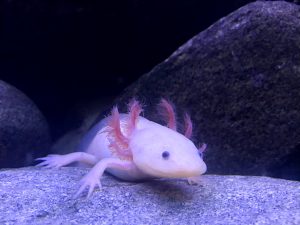
Imagine an animal that can regenerate parts of its body, spends its entire life underwater, wears a crown of feathery external gills, and retains many of its youthful characteristics for its entire life.
It sounds like something invented for a fantasy novel.
But the axolotl is very real.
With its unmistakable smile, delicate gills, and almost otherworldly appearance, the axolotl has become one of the most fascinating aquatic pets in the world. Yet behind that adorable face is an extraordinary amphibian with a remarkable history—and some very specific care requirements.
For anyone considering bringing an axolotl home, understanding the animal is just as important as choosing the aquarium.
The axolotl (Ambystoma mexicanum) is a type of salamander native to Mexico.
Most salamanders begin life in water, develop lungs and other adult characteristics, and eventually transition to living primarily on land. Axolotls are different.
They normally remain aquatic throughout their lives, retaining juvenile characteristics such as their spectacular external gills.
This phenomenon is known as neoteny.
In other words, an axolotl becomes sexually mature without undergoing the typical transformation into a terrestrial adult salamander.
That’s why people sometimes describe axolotls as animals that “never grow up.”
The story of the axolotl begins long before it became an aquarium favorite.
Its natural home is associated with the ancient lake and canal systems around what is now Mexico City, particularly Xochimilco.
The animal even has roots in Aztec mythology. Its name is commonly associated with Xolotl, an Aztec deity connected with transformation, fire, lightning, and death.
That history gives the axolotl an almost mythical quality—and unfortunately, its modern story in the wild is far less cheerful.
Habitat loss, urbanization, pollution, and introduced species have devastated wild populations. Although captive-bred axolotls are widely kept around the world, their wild relatives are critically endangered.
Owning one therefore offers an unusual opportunity to appreciate an animal whose history is intertwined with both ancient culture and modern conservation.
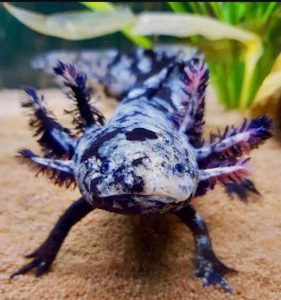
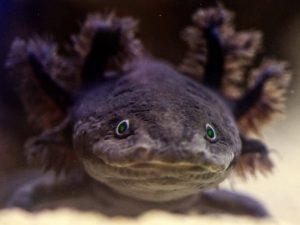
One of the first things people notice about an axolotl is the set of beautiful feathery structures extending from each side of its head.
Those aren’t decorative fins.
They’re external gills.
The branching filaments provide a large surface area through which oxygen can be exchanged with the surrounding water.
Axolotls may also obtain oxygen through their skin and possess lungs, occasionally swimming to the surface for air.
Watching those delicate gills move gently in the water is part of what makes an axolotl aquarium so mesmerizing.
Perhaps the most astonishing thing about axolotls is their ability to regenerate damaged tissue.
Axolotls have become enormously important to scientific research because they can regenerate complex structures to an extent humans cannot.
They are capable of regenerating portions of limbs and other tissues after injury.
Rather than simply producing scar tissue in the way humans normally do, an axolotl can rebuild remarkably complex biological structures.
Scientists study this ability in hopes of better understanding regeneration, development, healing, and disease.
So that smiling little creature sitting at the bottom of an aquarium is also helping researchers investigate some of the most fascinating questions in modern biology.
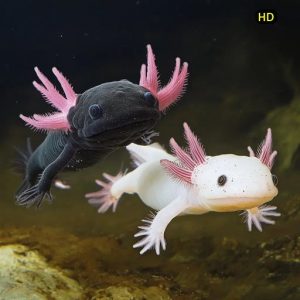
Wild axolotls typically have dark, mottled coloration that helps them blend into their environment.
Captive breeding, however, has produced several striking appearances.
Depending on genetics, captive axolotls may appear:
Their distinctive appearance has helped turn axolotls into internet celebrities—but appearance should never overshadow their specialized husbandry requirements.
This is where axolotl care differs dramatically from keeping many tropical aquarium species.
Axolotls are cold-water animals.
They should not be treated like tropical fish.
A commonly targeted aquarium temperature is approximately 60–68°F, with temperatures toward the cooler portion of that range often preferred.
Prolonged excessive heat can cause stress and may contribute to serious health problems.
Depending on your climate, maintaining suitable temperatures may require:
For owners living in warm climates, temperature management should be planned before bringing an axolotl home.
Axolotls may look tiny in photographs, but adults can commonly reach around 9–12 inches in length.
They also spend considerable time walking along the bottom of their environment.
That means floor space matters.
A 20-gallon long aquarium is often considered a practical starting point for a single adult, although providing a larger aquarium can make water management easier and give the animal more room to explore.
For multiple axolotls, substantially more space is necessary.
Bigger isn’t merely about luxury.
More water volume can help stabilize water chemistry, while additional floor space provides a more enriching environment.
An aquarium can look crystal clear and still contain harmful compounds.
Before an axolotl enters the tank, the aquarium should be fully cycled so that beneficial bacteria can process waste.
Owners should understand and regularly monitor:
Ammonia and nitrite should remain at 0 ppm in an established aquarium.
Regular water testing isn’t optional—it is one of the foundations of responsible axolotl care.
Partial water changes are also necessary to control nitrate and maintain healthy conditions.
Axolotls need excellent filtration, but there is an important catch:
They generally don’t appreciate strong currents.
Powerful water flow can create unnecessary stress.
This makes gentle filtration especially valuable.
Sponge filters are popular among axolotl keepers because they provide biological filtration while producing relatively gentle water movement. Other filtration systems can also work well when their output is appropriately controlled.
The goal is simple:
Clean water without turning the aquarium into a river.
Substrate choice deserves special attention.
Axolotls feed by rapidly sucking food into their mouths, which means loose material nearby may accidentally be swallowed.
Small aquarium gravel can therefore create an impaction hazard.
Many keepers choose:
Any rocks used in the enclosure should be far too large for the axolotl to swallow.
That beautiful bag of decorative aquarium gravel may look perfect—but safety must come first.
A great axolotl aquarium doesn’t need to be empty.
In fact, thoughtfully designed habitats can be spectacular.
Consider adding:
Axolotls generally prefer subdued lighting and benefit from places where they can retreat.
Because they don’t have eyelids, extremely bright aquarium lighting can be uncomfortable.
This creates an opportunity to design something beautiful: a mysterious underwater environment filled with shadowed caves, dark wood, stone, and gentle plant life.
Done correctly, an axolotl habitat can look almost prehistoric.
Axolotls are carnivores.
Earthworms are commonly considered an excellent staple for many adult axolotls because they provide strong nutritional value.
Depending on age and individual needs, diets may also include appropriate:
Food should be appropriately sized, and uneaten material should be removed before it begins degrading water quality.
Avoid assuming that anything sold as “fish food” is automatically suitable for an axolotl.
They are amphibians—not fish.
Usually, the safest answer is to be extremely cautious.
Many fish may nip at an axolotl’s delicate external gills. Other fish may become food themselves, potentially creating health risks.
Even axolotls housed together can occasionally injure one another, particularly when size differences exist or feeding conditions create competition.
A species-focused aquarium is often the simplest and safest approach.
And visually, an axolotl hardly needs supporting actors.
It’s already the star of the tank.
Axolotls may look irresistibly cute, but they aren’t pets that should routinely be picked up and cuddled.
Their delicate skin and protective slime coat can be damaged through unnecessary handling.
Whenever possible, enjoy your axolotl through observation rather than touch.
That’s part of the appeal.
An axolotl aquarium is like having a tiny window into another world.
Many axolotl problems begin with a handful of preventable mistakes.
Keeping the water too warm: These are cold-water amphibians, not tropical fish.
Skipping the nitrogen cycle: An uncycled aquarium can expose an axolotl to dangerous ammonia and nitrite.
Using small gravel: Anything small enough to swallow can potentially become dangerous.
Creating excessive water flow: Strong currents may stress the animal.
Using intense lighting without adequate shelter: Provide shaded areas and hiding places.
Overcrowding: More animals mean more waste and greater demands on filtration.
Buying the animal before preparing the aquarium: The habitat should be established first.
The best axolotl purchase you can make before buying the animal itself is knowledge.
An axolotl isn’t a short-term novelty.
With excellent husbandry, captive axolotls can live roughly 10–15 years, sometimes longer.
That makes bringing one home a genuine commitment.
During those years, owners must maintain water quality, appropriate temperatures, filtration, nutrition, and a safe environment.
The reward is the opportunity to observe one of nature’s strangest and most beautiful animals for many years.
There is something captivating about an axolotl.
Perhaps it’s the feathery crown of gills.
Perhaps it’s the permanent expression that looks suspiciously like a smile.
Or maybe it’s knowing that this peaceful underwater creature belongs to an ancient lineage, possesses astonishing regenerative abilities, and still survives in remnants of a landscape that existed long before the modern city surrounding it.
Whatever the reason, axolotls inspire something that relatively few pets can:
wonder.
Axolotls can make extraordinary aquatic pets for owners willing to understand their specialized needs.
They require cool temperatures, pristine water, gentle filtration, appropriate substrate, carefully chosen décor, and a properly established aquarium. Meet those requirements, however, and you’ll have the opportunity to create one of the most fascinating aquatic displays imaginable.
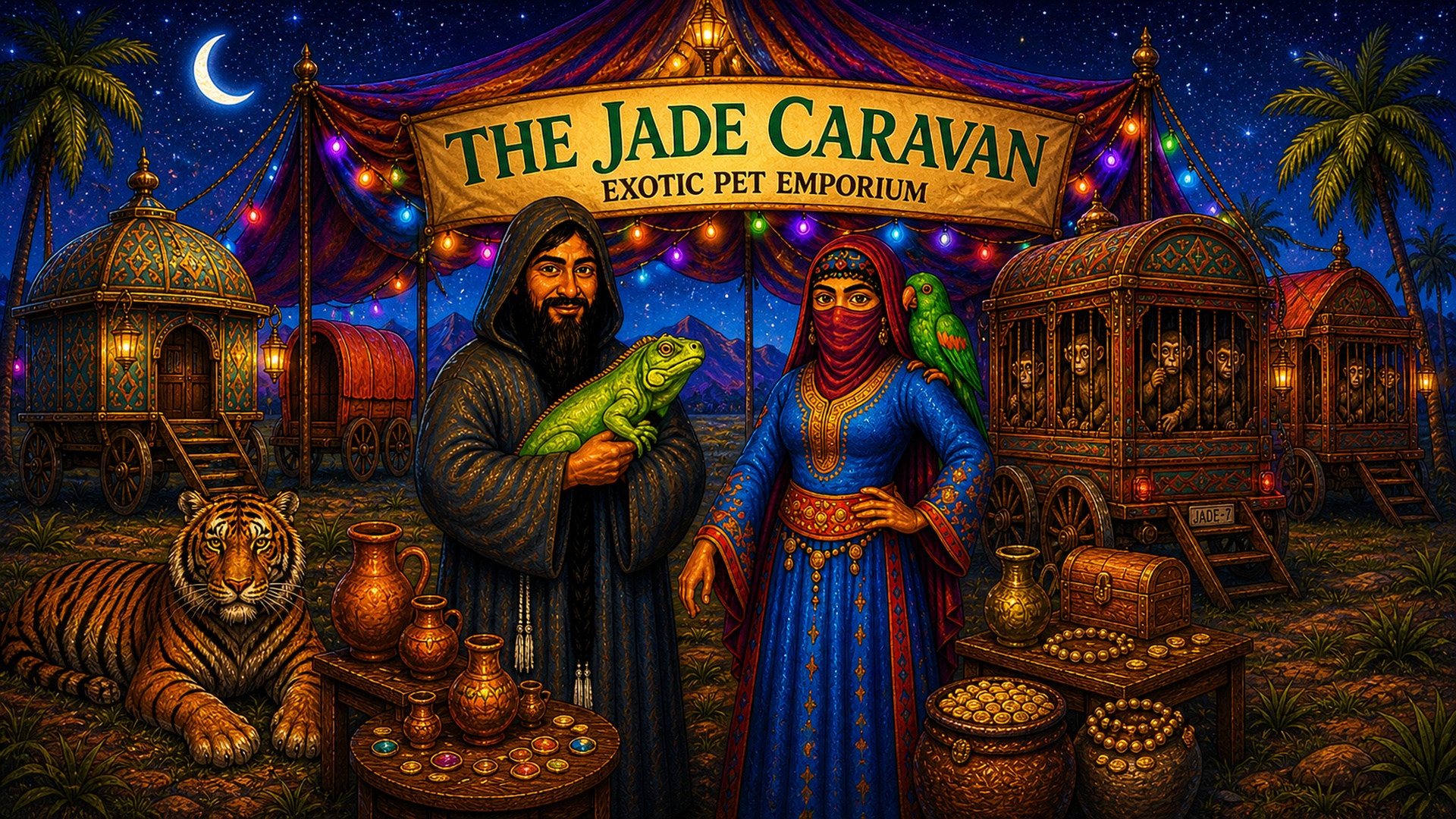
At The Jade Caravan, we believe extraordinary animals deserve extraordinary environments. From beautiful aquariums and filtration equipment to habitat décor, stands, accessories, and aquatic essentials, we’re passionate about helping exotic pet enthusiasts create environments where unusual animals can truly thrive.
An axolotl aquarium isn’t simply another fish tank.
It’s a glimpse into an ancient underwater world—and at its center is one of the most extraordinary creatures on Earth.