

There is something almost hypnotic about a beautiful aquarium.
A lush freshwater tank can resemble a submerged forest, filled with graceful plants, driftwood, stone, and schools of colorful fish moving through the landscape. A saltwater aquarium can transport you somewhere entirely different—a miniature tropical reef glowing with extraordinary colors, unusual marine life, and corals that seem almost too beautiful to be real.
Both can become spectacular living centerpieces in your home.
But if you’ve never owned an aquarium before, one question usually comes first:
Should I start with freshwater or saltwater?
For most beginners, freshwater is the easier and less expensive introduction to aquarium keeping. That doesn’t necessarily mean it’s the right choice for everyone, however. If your dream has always been to build a breathtaking marine reef, beginning with saltwater may be worth the additional learning curve.
Let’s look at the differences.
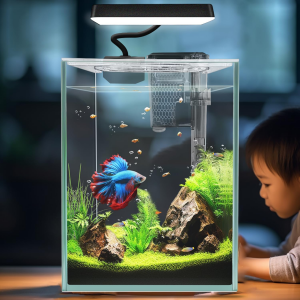
Freshwater aquariums are generally the easiest place to begin because they require fewer specialized components and are usually more forgiving while you’re learning.
But “beginner-friendly” certainly doesn’t mean boring.
Modern freshwater aquariums can be extraordinary.
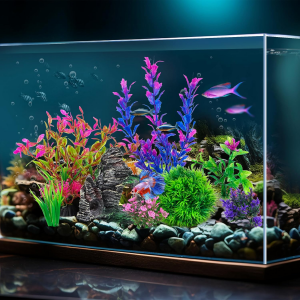
Imagine a dark piece of natural driftwood rising through a forest of brilliant green plants while tiny neon tetras move through the leaves like flashes of blue light. Add stone, moss, carefully positioned lighting, and a beautiful aquarium stand, and the result can rival an expensive piece of interior décor.
Freshwater setups generally offer:
They’re also extremely versatile.
You can create peaceful community tanks, heavily planted aquascapes, species-specific environments, African cichlid displays, shrimp tanks, cold-water habitats, or even specialized aquariums for unusual aquatic pets.
A basic freshwater setup usually requires:
One of the most important things beginners need isn’t equipment at all:
Patience.
Before adding fish, you need to understand the aquarium’s nitrogen cycle.
Fish produce waste. That waste eventually creates ammonia, which is toxic to aquatic animals.
Fortunately, beneficial bacteria establish themselves inside a properly cycled aquarium and help convert dangerous waste products into less harmful compounds.
This biological process is called the nitrogen cycle.
A new aquarium should be properly cycled before it is fully stocked.
Learning about ammonia, nitrite, nitrate, pH, and regular water testing might sound intimidating at first, but it quickly becomes routine.
And this knowledge becomes even more important if you eventually move into saltwater aquariums.
Then there is saltwater.
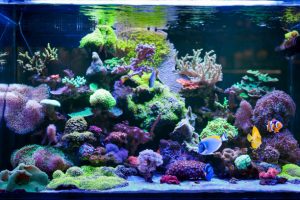
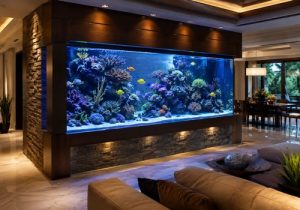
Few things inside a home can command attention like a beautifully designed marine aquarium.
Imagine brilliant blue lighting illuminating living rock while clownfish weave between coral formations. Shrimp emerge from tiny caves. Hermit crabs move across the bottom. Corals sway gently in the current while brilliantly colored fish disappear into crevices and emerge somewhere else.
A great saltwater aquarium doesn’t feel like decoration.
It feels like you’ve installed a window into the ocean.
Marine aquariums offer access to an extraordinary variety of animals, colors, textures, and behaviors.
Depending on the type of system, you may keep:
However, compatibility and husbandry requirements vary dramatically between species, so every animal should be researched before purchase.
This is particularly important with reef systems, where fish, corals, and invertebrates all share the same environment.
Not every saltwater aquarium needs to become a coral reef.
Beginners interested in marine fish can start with a fish-only or fish-only-with-live-rock setup.
These systems can be somewhat simpler than full reef aquariums because you’re not simultaneously maintaining the specialized conditions required by sensitive corals.
A reef aquarium adds another layer of complexity.
Corals may require careful control of:
That additional work is part of what reef enthusiasts love.
You’re not merely keeping fish.
You’re managing an ecosystem.
Freshwater fish certainly require good water quality, but marine environments generally demand greater consistency.
Saltwater aquarists must pay particular attention to salinity.
As water evaporates, the salt remains behind. This means the aquarium can become progressively saltier unless freshwater is added to replace evaporation.
A refractometer or other reliable salinity-measuring device becomes an important part of the equipment collection.
Water changes also require properly prepared saltwater rather than simply conditioned tap water.
Depending on the aquarium and local water quality, many marine hobbyists use purified RO/DI water as the foundation for their systems.
The exact equipment depends on whether you’re creating a fish-only system or a reef, but a marine setup may include:
More advanced reef aquariums may incorporate automated dosing equipment, controllers, sumps, refugiums, and automatic top-off systems.
That’s one of the fascinating things about this hobby:
Your aquarium can be as simple or as sophisticated as you want it to become.
In most cases, saltwater aquariums cost more.
The aquarium itself may cost roughly the same, but marine systems often require additional equipment, specialized lighting, salt mix, testing supplies, circulation equipment, and more expensive livestock.
Corals and certain marine fish can also represent significant investments.
Freshwater gives beginners considerably more flexibility.
You can create a beautiful aquarium on a modest budget and gradually upgrade equipment, lighting, plants, décor, and filtration as your interest grows.
Both require regular care.
Freshwater maintenance generally includes:
Saltwater adds additional responsibilities such as monitoring salinity and, in reef systems, maintaining important elements of seawater chemistry.
Neither aquarium should be viewed as maintenance-free.
These are living environments.
But maintaining them becomes part of the enjoyment for many hobbyists.
If you love the beauty of reef aquariums but aren’t ready for marine husbandry, consider a planted freshwater aquarium.
Aquascaping has transformed freshwater aquarium design into an art form.
Using combinations of:
aquarists can create underwater mountains, forests, valleys, riverbanks, and landscapes that look almost impossible inside a glass tank.
Some aquascapes are so beautiful that the fish almost become secondary to the environment itself.
A well-planned freshwater aquarium can be an excellent introduction to aquatic animal care for families.
Children can learn about ecosystems, biology, water chemistry, animal behavior, and responsibility.
However, adults should always remain responsible for ensuring that water quality, feeding, maintenance, and animal welfare are properly managed.
An aquarium isn’t a decoration that happens to contain animals.
It’s an ecosystem under your care.
You’ve chosen the aquarium.
You’ve bought the filter.
You’ve found beautiful fish.
And suddenly you want them all today.
Don’t.
One of the most valuable skills in aquarium keeping is learning to move slowly.
Establish the aquarium.
Cycle it properly.
Research every species.
Add livestock gradually.
Observe how the biological system responds.
Some of the most beautiful aquariums you’ll ever see weren’t created over a weekend.
They evolved over months—or years.
For most first-time aquarium owners, freshwater wins.
It provides the perfect environment for learning filtration, water chemistry, aquarium cycling, feeding, maintenance, and animal care without introducing all of the additional variables associated with marine systems.
But there’s an important exception.
If you’ve dreamed about owning a saltwater aquarium for years and freshwater simply doesn’t excite you, don’t automatically abandon that dream.
Research thoroughly.
Start with an appropriately sized system.
Choose hardy beginner-friendly marine species.
Invest in reliable equipment.
And take your time.
A carefully planned beginner saltwater aquarium can absolutely succeed.
There’s something funny that happens to aquarium enthusiasts.
They buy one tank.
Then they discover another species.
Then they see an incredible aquascape.
Then they start researching reef tanks.
Suddenly they’re wondering whether there’s room for another aquarium on the opposite wall.
That’s because aquarium keeping isn’t simply about owning fish.
It’s about creating worlds.
Every aquarium presents an opportunity to design a completely different ecosystem—tropical rivers, planted forests, rocky African lakes, mysterious cold-water environments, or colorful coral reefs.
So, freshwater or saltwater?
If you’re completely new to the hobby, a freshwater aquarium is generally the best place to begin. It’s more affordable, more forgiving, and gives you an excellent foundation in aquatic husbandry.
If you’re fascinated by marine life and willing to invest additional time, money, and research, however, a saltwater aquarium can become one of the most spectacular features in your home.
Whichever path you choose, success comes from the same place:
Knowledge, patience, quality equipment, and respect for the living creatures inside your care.
At The Jade Caravan, we believe an aquarium can be much more than a container for fish. It can become a living centerpiece—a carefully designed ecosystem filled with movement, color, and life.
Whether you’re creating your very first freshwater habitat or dreaming of an elaborate marine reef, explore our selection of Aquariums, Aquarium Accessories, Stands and Pedestals, filtration equipment, lighting, habitat décor, and Exotic Pet Supplies to help turn that empty space in your home into an extraordinary underwater world.
Because sometimes the most beautiful room in your house isn’t a room at all.
It’s the world you’ve created behind the glass.